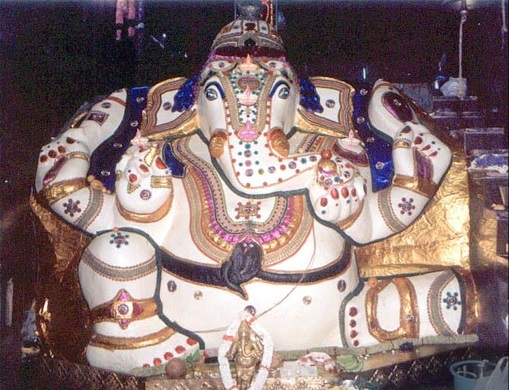
The festivals of Karnataka fill the whole year, from Ugadi, the Kannada New Year, in spring to the elephant procession of Mysuru (Mysore) Dasara in autumn and the buffalo races of the coast in winter. Some are kept quietly at home with a lamp and a plate of sweets; others bring lakhs of people into the streets of a single temple town for one night.
This guide sets out the major festivals of Karnataka month by month: what each one marks, where it is best seen, and how it is kept. It covers the Hindu festivals observed across the state, the temple fairs known as jatre (temple fair), the festivals of the Jain, Kodava and Tulu communities, the cultural utsavas (festivals) organised by the Government of Karnataka, and the feasts of the state’s Christian and Muslim communities. Most dates follow the lunar calendar and move every year, so each section links to our detailed guide on that festival, where the current year’s dates are kept up to date.
Key Takeaways
- Mysuru Dasara is the Nada Habba (state festival) of Karnataka and ends on Vijayadashami with the Jamboo Savari, usually in September or October.
- Ugadi, the Kannada New Year, falls on the first day of Chaitra, in March or April.
- Makara Sankranti (Suggi Habba) on 14 or 15 January is the main harvest festival, marked by the exchange of ellu-bella.
- Temple festivals such as Bengaluru Karaga, Vairamudi at Melukote and Dodda Jatre at Nanjangud draw lakhs of devotees.
- Kambala buffalo races run on the coast from November to March; Kodagu keeps Kailpodh, Kaveri Sankramana and Puthari.
- Most festivals of Karnataka follow the lunar calendar, so check the year’s dates before you travel.
Table of Contents
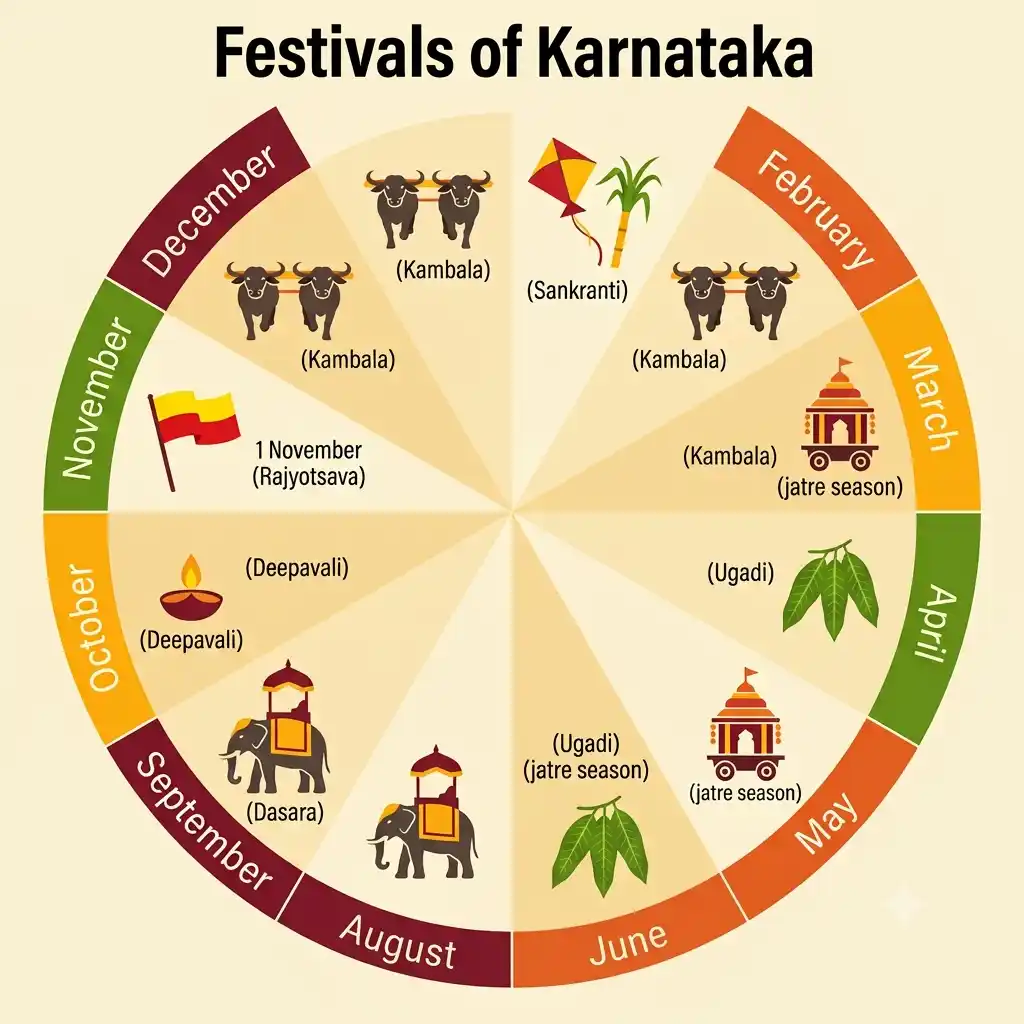
Festivals of Karnataka at a glance: the calendar
The table below lists Karnataka’s main festivals by the months they usually fall in. Treat the months as a guide rather than fixed dates: a festival tied to a tithi (lunar day) can move by two or three weeks from one year to the next. For the public holidays the state government has declared this year, see the Karnataka government holidays list for 2026. The traditional Kannada calendar behind these dates is explained in our guide to the 12 months in Kannada.
| Month (usual) | Festival | Where it is best seen | What it marks |
|---|---|---|---|
| January | Makara Sankranti (Suggi Habba) | Across the state | Harvest; the sun entering Makara (Capricorn) |
| January | Pattadakal Dance Festival | Pattadakal, Bagalkot district | Classical dance at the temple complex |
| January (every two years) | Udupi Paryaya | Udupi | Handover of worship at the Sri Krishna Matha |
| January | Bengaluru Habba | Bengaluru | City arts and culture festival |
| January to March (dates vary) | Hampi Utsava (Vijaya Utsava) | Hampi, Vijayanagara district | Heritage of the Vijayanagara Empire |
| February to March | Mahashivaratri | Shiva temples across the state | Night of Shiva; fasting and vigil |
| March to April | Ugadi | Across the state | Kannada New Year |
| March to April | Bengaluru Karaga | Dharmaraya Swamy Temple, Bengaluru | Draupadi as Shakti; Chaitra full moon procession |
| March to April | Vairamudi Brahmotsava | Melukote, Mandya district | Diamond crown festival of Cheluvanarayana Swamy |
| March to April | Dodda Jatre | Nanjangud, Mysuru district | Five-chariot festival of Srikanteshwara |
| July to August | Aati Kalenja | Dakshina Kannada and Udupi | Folk ritual of the monsoon month of Aati |
| July to August | Naga Panchami | Across the state | Worship of serpent deities |
| July to August | Vara Mahalakshmi Vratha | Homes across the state | Worship of Goddess Lakshmi |
| August to September | Krishna Janmashtami | Udupi and Krishna temples | Birth of Krishna |
| August to September | Gowri Ganesha | Across the state | Goddess Gowri and Lord Ganesha |
| Early September | Kailpodh | Kodagu | Kodava festival of arms |
| September to October | Mysuru Dasara (Navaratri) | Mysuru | Nada Habba; Jamboo Savari on Vijayadashami |
| Mid-October | Kaveri Sankramana | Talakaveri, Kodagu | Theerthodbhava at the source of the Kaveri |
| October to November | Hasanamba Jatre | Hassan | Temple opens for about two weeks a year |
| October to November | Deepavali and Bali Padyami | Across the state | Festival of lights |
| 1 November | Karnataka Rajyotsava | Across the state | Formation of the state in 1956 |
| November to December | Kadalekai Parishe | Basavanagudi, Bengaluru | Groundnut fair, last Monday of Karthika |
| November to December | Puthari (Huthri) | Kodagu | Rice harvest |
| November to March | Kambala | Dakshina Kannada and Udupi | Buffalo races in paddy fields |
| December to January | Vaikuntha Ekadashi | Vishnu temples | Opening of the Vaikuntha Dwara |
| Once in 12 years | Mahamastakabhisheka | Shravanabelagola, Hassan district | Anointing of Gommateshwara; last held in 2018 |
| Months are approximate: most festivals of Karnataka follow the lunar calendar and move each year. Sources: karnataka.com festival guides and Karnataka Tourism, as of October 2026. | |||
Mysuru Dasara: the Nada Habba of Karnataka
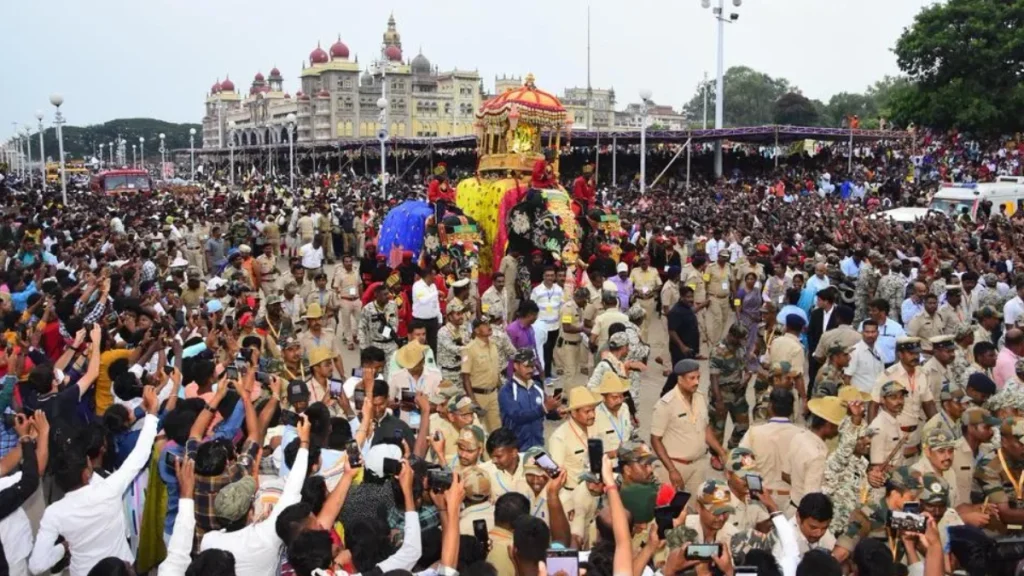
Of all the festivals of Karnataka, Mysuru Dasara is the largest and the one most closely tied to the state’s identity. It is the Nada Habba (state festival), organised by the Government of Karnataka through the Mysuru district administration. Dasara is the South Indian name for the festival much of India calls Dussehra or Vijayadashami. It closes Navaratri, the nine nights of worship of the Goddess, and usually falls in September or October.
Devotees believe the festival celebrates the victory of Goddess Chamundeshwari over the buffalo demon Mahishasura, the legend that also gives Mysuru its name. Its roots lie in the Mahanavami festival of the Vijayanagara kings at Hampi. According to the official history, Raja Wadiyar I first celebrated Dasara at Srirangapatna in 1610, and the Mysuru tradition is counted from that year. Our full guide to Mysore Dasara’s history and traditions traces the story from Vijayanagara to the present day.
Navaratri, Ayudha Puja and the palace rituals
For ten days the city becomes one stage. Mysuru Palace is illuminated every evening, the streets are lit, and the Dasara Exhibition, food fair, flower show and cultural programmes run across the city, most of them free. Inside the palace, the Wadiyar family keeps a private Navaratri with the traditional durbar (royal assembly). On Mahanavami, the ninth day, homes, shops and workshops across Karnataka observe Ayudha Puja, the worship of tools, weapons and vehicles, which are cleaned, decorated and blessed.
Jamboo Savari and the torchlight parade
On Vijayadashami, the last day, the Jamboo Savari elephant procession leaves Mysuru Palace for the Bannimantap grounds. The lead elephant carries the idol of Goddess Chamundeshwari in the golden howdah, the Mysore Ambari, followed by tableaux, folk troupes and bands. The elephants arrive weeks in advance from the forest camps; you can meet them in our guide to the elephants of Mysore Dasara. The day closes at Bannimantap with the Torchlight Parade, Panjina Kavayathu in Kannada. The route, timings and viewing points are covered in our guide to the Mysore Dasara parade.
Bombe Habba: the doll festival at home

Away from the processions, many families across the state set out the bombe habba (doll festival): steps of dolls depicting gods, epics, royal processions and village life, arranged afresh each Navaratri. Read about the significance of the Dasara doll festival and find Dasara doll arrangement ideas and where to buy them.
Dasara beyond Mysuru
Dasara is kept across the state, not only in Mysuru. In Mangaluru (Mangalore), the festival centres on the Kudroli Gokarnanatheshwara Temple, and its best-known sight is the huli vesha (tiger dance), in which painted dancers perform to the beat of drums in honour of Goddess Durga, whose vehicle is the tiger.
Planning a Dasara visit
Dasara week is the busiest time of year for the festivals of Karnataka. Hotels in Mysuru fill early, and the Jamboo Savari route is crowded from the morning. The schedule, ticket options and free events for this year are listed in our guide to the Mysore Dasara dates and events. If you would rather see the decorated city on foot, try our Mysore Dasara walking tour.
Hindu festivals of Karnataka through the year
Most festivals of Karnataka follow the Hindu lunar calendar. They are kept in homes and temples across the state, with regional variations in food and ritual.
Ugadi: the Kannada New Year
Ugadi marks the start of the new year in the Kannada calendar and falls on the first day of Chaitra, in March or April. The day begins with an oil bath, new clothes and mango-leaf toranas (door garlands) at the entrance. Families eat bevu-bella, a mix of neem and jaggery that stands for the bitter and sweet experiences of the year ahead, and the reading of the panchanga (almanac) for the new year is a common custom. Holige (sweet flatbread) is the festival dish in many homes, and because Ugadi opens the year, it is the natural place to begin the cycle of Hindu festivals of Karnataka.
Makara Sankranti: the harvest festival
Makara Sankranti in Karnataka falls on 14 or 15 January, when the sun enters Makara (Capricorn). Known in rural Karnataka as Suggi Habba (harvest festival), it is marked by the exchange of ellu-bella, a mix of sesame, jaggery, coconut and groundnut, with the saying “ellu-bella thindu olle maathaadi” (eat sesame and jaggery and speak kindly). In villages, decorated cattle are led across a small fire in a custom called kichchu haayisuvudu. Kite festivals are held in north Karnataka and on the coast around this time. Of all the harvest festivals of Karnataka, Sankranti is the one kept in almost every home.
Mahashivaratri
Mahashivaratri, the night of Shiva, falls in February or March. Devotees fast through the day and keep a jagarane (night-long vigil) at Shiva temples, from Gokarna on the coast to Bengaluru (Bangalore) and Nanjangud.
Vara Mahalakshmi Vratha

Vara Mahalakshmi is a vratha (vow and ritual) to Goddess Lakshmi, kept mainly by married women on the Friday before the full moon of Shravana, in July or August. A kalasha (decorated pot) is dressed as the Goddess and worshipped at home for the well-being of the family.
Naga Panchami
Naga Panchami falls in Shravana and honours serpent deities. Milk is offered at nagara kallu (serpent stones), which are found under trees and at temple entrances across the state.
Krishna Janmashtami
Krishna Janmashtami celebrates the birth of Krishna in August or September. In Udupi it is called Ashtami, and the Sri Krishna Matha holds the Vitla Pindi celebration, when performers in costume, including huli vesha troupes, fill the car street.
Gowri Ganesha
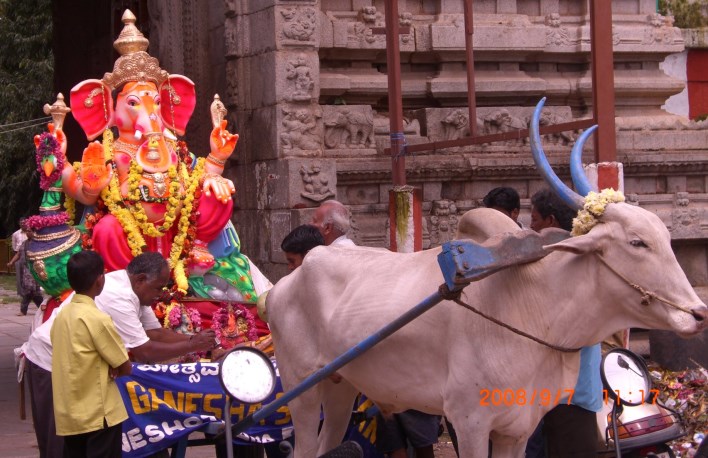
The Gowri Ganesha festival is one of the most widely kept festivals of Karnataka. On the first day, Gowri Habba, Goddess Gowri is welcomed home as a daughter visiting her parents, and married women exchange the bagina (a gift of turmeric, kumkum, bangles, grains and a coconut). The next day is Ganesha Chaturthi, when people install clay idols of Ganesha in homes and public pandals and later immerse them in a lake, tank, or river. Public celebrations may last from a day to several weeks, depending on the organisers.
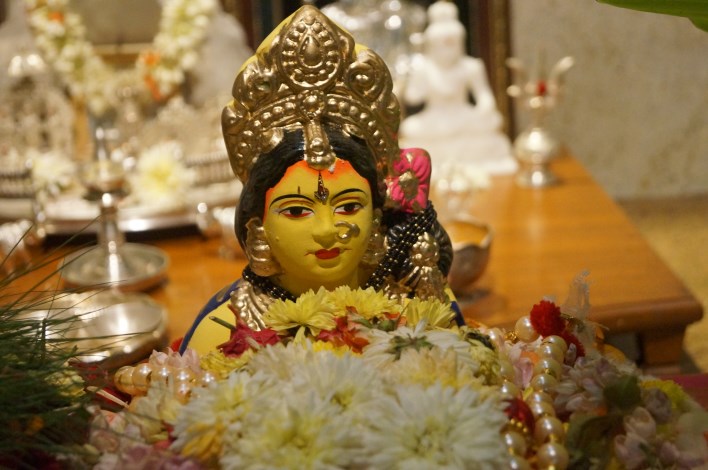
Deepavali and Bali Padyami
Deepavali falls in October or November. In Karnataka, it is kept over three days: Naraka Chaturdashi, with an early-morning oil bath; Lakshmi Puja on the new moon; and Bali Padyami, which recalls the legend of King Bali. Lamps are lit across homes and temples.
Vaikuntha Ekadashi
Vaikuntha Ekadashi falls in December or January. Vishnu temples open the Vaikuntha Dwara (gate of heaven), and devotees queue from before dawn to pass through it.
Temple festivals of Karnataka: jatre and rathotsava
Many of Karnataka’s most striking festivals belong to a single temple, and temple festivals are where local tradition is strongest. A jatre is a temple fair; it usually centres on the rathotsava (chariot festival), when the deity is drawn through the streets on a tall wooden chariot.
Bengaluru Karaga

The Karaga festival is Bengaluru’s oldest festival, held at the Dharmaraya Swamy Temple in the old city in March or April. According to tradition, Draupadi appeared as the goddess Shakti and promised to return to her devotees every year at the first full moon of the Hindu year. On the Chaitra full moon night, the priest carries the karaga, a flower-covered pyramid on his head, through the old city, escorted by the Veerakumaras of the Thigala community with drawn swords.
Vairamudi Brahmotsava, Melukote
At Vairamudi Brahmotsava, the deity of the Cheluvanarayana Swamy Temple in Melukote (Mandya district) is adorned with the vairamudi, a diamond-studded crown, and taken out in procession through the night. The crown is kept in the government treasury at Mandya and is brought to Melukote under security only for the festival, which usually falls in March or April.
Dodda Jatre, Nanjangud
The Dodda Jatre at Nanjangud, near Mysuru, is the annual car festival of the Srikanteshwara (Nanjundeshwara) Temple. Its highlight is the Pancha Maha Rathotsava, when five chariots carrying the deities are pulled through the old town by devotees.
Hasanamba Jatre, Hassan
The Hasanamba Temple in Hassan opens to the public for only about two weeks a year, around Deepavali in October or November. Devotees believe the lamp lit when the doors close is still burning when they reopen a year later, and the brief opening draws long queues.
Kadalekai Parishe, Bengaluru
Kadalekai Parishe, the groundnut fair, is held on the last Monday of the month of Karthika (November or December) around the Dodda Ganesha and Bull Temple in Basavanagudi, Bengaluru. Farmers bring their first groundnut harvest to sell, and according to local tradition they offer it to the Nandi of the Bull Temple in thanks.
Udupi Paryaya
The Udupi Paryaya takes place every two years, in January, when the worship of Sri Krishna at the Udupi Sri Krishna Matha passes from one of the eight Ashta Mathas to the next. The incoming swamiji is taken in procession through a decorated town, and the change of charge is marked with ceremonies and cultural programmes.
Regional and community festivals of Karnataka
Some festivals of Karnataka belong to a particular region or community, and they are the best way to see the state’s diversity.
Mahamastakabhisheka, Shravanabelagola
The Mahamastakabhisheka is the great Jain head-anointing ceremony of the monolithic statue of Gommateshwara (Bahubali) at Shravanabelagola in Hassan district. The statue, about 17 m (57 feet) tall, is bathed from scaffolding with water, milk, sugarcane juice, sandalwood paste, turmeric and flowers. The ceremony is held once in 12 years; the last was in 2018, and the next is expected around 2030, though the dates are fixed by Jain religious authorities and have not yet been announced. The history of the Mahamastakabhisheka explains the legend behind it.
Festivals of the Kodavas
In Kodagu (Coorg), the Kodava community keeps three festivals of its own. Kailpodh, in early September, marks the end of the paddy-transplanting season and honours the family’s weapons. Kaveri Sankramana falls in mid-October, when devotees gather at Talakaveri, the source of the river Kaveri, to witness the Theerthodbhava, the moment the spring wells up in the sacred tank. Puthari (Huthri), around the full moon of November or December, celebrates the rice harvest, when the first sheaves are cut and brought home. All three tie the festivals of Karnataka’s hill country closely to the farming year.
Tulu Nadu: Kambala and Aati
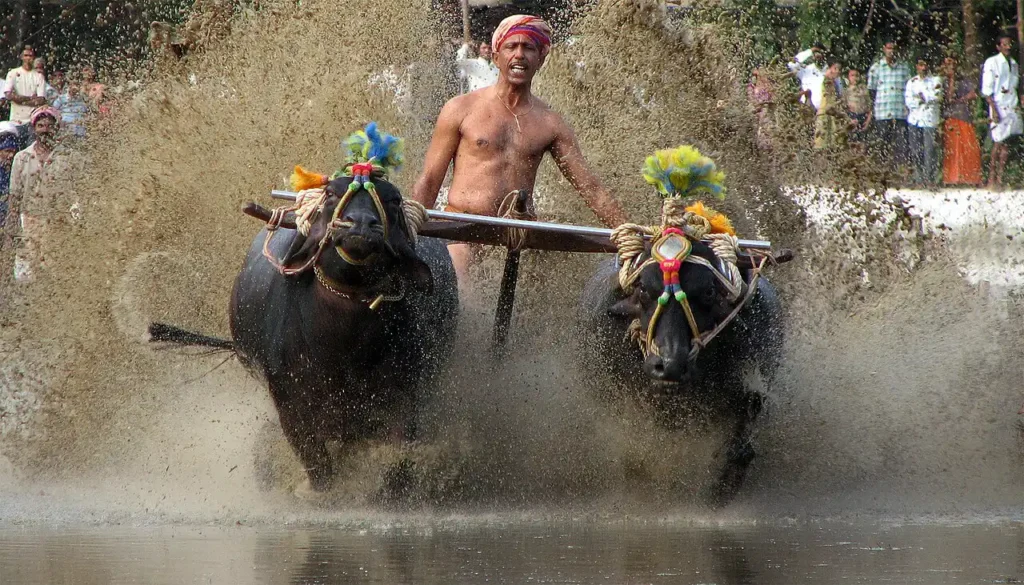
The coastal districts of Dakshina Kannada and Udupi, known as Tulu Nadu, have festivals of their own. Kambala is a buffalo race run on parallel tracks of waterlogged paddy field, held through the season from November to March. Each pair of buffaloes is driven by a runner who races barefoot behind them. In May 2023, the Supreme Court of India upheld Karnataka’s law permitting Kambala, subject to rules for the welfare of the animals. During the monsoon month of Aati (July to August), members of the Nalke community go from house to house as Aati Kalenja, a protective spirit believed to ward off illness. Bhuta Kola, the night-long worship of local spirit deities, is another living tradition of the region, and for many visitors these coastal traditions are the most memorable festivals of Karnataka.
Cultural festivals of Karnataka: the utsavas
Alongside the religious calendar, the Government of Karnataka organises cultural festivals, called utsavas, at heritage sites and district headquarters. They are the easiest festivals of Karnataka for a visitor to plan around, since they are announced with fixed dates.
Hampi Utsava

Hampi Utsava, also called Vijaya Utsava, celebrates the heritage of the Vijayanagara Empire among the ruins of Hampi, its former capital. Over about three days, music, dance, folk performances and light shows are staged against the monuments. Its dates have varied in recent years, with editions held between January and March, so check the announcement from the Vijayanagara district administration before you plan.
Pattadakal Dance Festival
The Pattadakal Dance Festival is held at the Pattadakal temple complex in Bagalkot district, a UNESCO World Heritage Site, usually in January. Classical dancers perform against the Chalukyan temples, where the kings of the Badami Chalukyas were crowned.
Bengaluru Habba and district utsavas
Bangalore Hubba (Bengaluru Habba) is a city-wide arts and culture festival held in January, with music, dance, theatre, film and talks at venues across Bengaluru. Districts hold their own utsavas too, such as Kadambotsava at Banavasi, Kittur Utsava at Kittur and Karavali Utsava on the coast; Karnataka Tourism lists the current year’s events on its festivals and events calendar.
Karnataka Rajyotsava
Karnataka Rajyotsava, on 1 November, marks the formation of the state in 1956, when the Kannada-speaking regions were united as Mysore State; the state was renamed Karnataka on 1 November 1973. It is a public holiday. The red-and-yellow Kannada flag goes up across the state, and the Government of Karnataka presents the Rajyotsava Awards to people who have contributed to the state. It is the one civic date among the festivals of Karnataka, celebrated by every community alike.
Christian, Muslim and other faith festivals in Karnataka
The festivals of Karnataka also include those of the state’s Christian, Muslim and other communities. Christmas is celebrated across the state, most visibly in Bengaluru and in Mangaluru, which has a large Konkani Catholic community. On 8 September, Konkani Catholics on the coast keep Monti Fest, a harvest feast marking the birth of Mary, and in Bengaluru the feast of St Mary’s Basilica in Shivajinagar draws large crowds in early September.
Eid ul-Fitr, Bakrid and Eid-e-Milad are public holidays and are kept with prayers and community meals. In Kalaburagi (Gulbarga), the annual urus (death anniversary) of the Sufi saint Khwaja Bande Nawaz at his dargah brings pilgrims of many faiths. Mahavir Jayanti, Basava Jayanti, which honours the 12th-century reformer Basavanna, and Kanakadasa Jayanti are also public holidays in Karnataka, a reminder that the festivals of Karnataka belong to all its communities.
Tips for experiencing the festivals of Karnataka
Check the year’s dates first. Because most festivals of Karnataka follow the lunar calendar, confirm the date with the temple, the district administration or the official festival website before you book travel.
Book early for the big ones. Rooms in Mysuru during Dasara week, Hampi during Hampi Utsava and Udupi during Paryaya sell out weeks ahead.
Dress modestly and follow temple rules. Many temples ask visitors to remove footwear, and some have dress codes for entry to the sanctum. Photography may be restricted inside temples and during some rituals, so ask before taking pictures.
Expect crowds and road closures. During the Jamboo Savari, the Karaga procession and the big rathotsavas, roads in the town centre are closed to private vehicles, so plan to walk or use festival shuttles where they run.
The table below lists the nearest railway station and airport for Karnataka’s major festival venues.
Table 2: How to reach the venues of the major festivals
| Festival | Venue | Nearest railway station | Nearest airport |
|---|---|---|---|
| Mysuru Dasara | Mysuru | Mysuru Junction | Mysuru Airport (limited flights); Kempegowda International Airport, Bengaluru |
| Bengaluru Karaga | Dharmaraya Swamy Temple, Bengaluru | KSR Bengaluru City | Kempegowda International Airport, Bengaluru |
| Kadalekai Parishe | Basavanagudi, Bengaluru | KSR Bengaluru City | Kempegowda International Airport, Bengaluru |
| Vairamudi Brahmotsava | Melukote, Mandya district | Mandya | Kempegowda International Airport, Bengaluru |
| Dodda Jatre | Nanjangud, Mysuru district | Nanjangud Town | Mysuru Airport; Kempegowda International Airport, Bengaluru |
| Hasanamba Jatre | Hassan | Hassan Junction | Kempegowda International Airport, Bengaluru |
| Mahamastakabhisheka | Shravanabelagola, Hassan district | Shravanabelagola | Kempegowda International Airport, Bengaluru |
| Kambala | Dakshina Kannada and Udupi districts | Mangaluru Central; Udupi | Mangaluru International Airport |
| Udupi Paryaya | Udupi | Udupi | Mangaluru International Airport |
| Kaveri Sankramana | Talakaveri, Kodagu | Mysuru Junction (Kodagu has no railway) | Mangaluru International Airport; Kannur International Airport, Kerala |
| Hampi Utsava | Hampi, Vijayanagara district | Hosapete Junction | Vidyanagar Airport, Toranagallu; Hubballi Airport |
| Pattadakal Dance Festival | Pattadakal, Bagalkot district | Badami | Hubballi Airport; Belagavi Airport |
| Several venues are reached by road from the nearest town. Check current train and flight schedules before you travel. As of October 2026. | |||
Frequently asked questions about the festivals of Karnataka
What are the main festivals of Karnataka?
The main festivals of Karnataka are Mysuru Dasara, Ugadi, Makara Sankranti, Gowri Ganesha, Deepavali, Mahashivaratri, Vara Mahalakshmi and Karnataka Rajyotsava. Regional highlights include Bengaluru Karaga, Kambala on the coast, the Kodava festivals of Kodagu and the Mahamastakabhisheka at Shravanabelagola.
Which is the state festival of Karnataka?
Mysuru Dasara is the Nada Habba, or state festival, of Karnataka. The Government of Karnataka organises it each year in Mysuru, and it ends on Vijayadashami with the Jamboo Savari elephant procession.
When is the Kannada New Year celebrated?
The Kannada New Year is celebrated as Ugadi, on the first day of the month of Chaitra in the lunar calendar. It usually falls in March or April.
Which harvest festivals are celebrated in Karnataka?
Makara Sankranti, also called Suggi Habba, is the main harvest festival among the festivals of Karnataka, celebrated on 14 or 15 January. Puthari is the rice-harvest festival of Kodagu, and Kadalekai Parishe in Bengaluru celebrates the groundnut harvest.
What is the best time to see the festivals of Karnataka?
September to March is the busiest season for the festivals of Karnataka, with Mysuru Dasara, Deepavali, Rajyotsava, the Kambala races, Makara Sankranti and the cultural utsavas at Hampi and Pattadakal. The weather is also pleasant for travel in these months.
What is Kambala, and is it allowed?
Kambala is a traditional buffalo race run in waterlogged paddy fields in Dakshina Kannada and Udupi districts, held from November to March. In May 2023, the Supreme Court of India upheld Karnataka’s law permitting it, with rules to protect the animals.
How often is the Mahamastakabhisheka held?
The Mahamastakabhisheka of Gommateshwara at Shravanabelagola is held once in 12 years. The last was in 2018, and the next is expected around 2030, though the dates have not yet been announced.
Is Karnataka Rajyotsava a public holiday?
Yes. Karnataka Rajyotsava, on 1 November, is a public holiday across the state. It marks the formation of the state in 1956.